Showing posts with label Oil. Show all posts

Friday, January 23, 2015

World Oil Prices Rise On Saudi Arabia's King Abdullah's Death

KING ABDULLAH SAUDI
By Jonathan Fahey And Youkyung Lee, The Associated Press
Oil prices rose on news of the death of Saudi Arabia's powerful King Abdullah, but the increase is likely to be short-lived without a cut in the kingdom's immense crude production.

The benchmark U.S. crude futures contract was up 71 cents to $47.02 a barrel at 0725 GMT on Friday. Brent crude, an international benchmark, was up 92 cents to $49.42 a barrel.

The small rise reflects added uncertainty about Saudi oil policy because the country's new absolute monarch, Abdullah's 79-year-old half brother Prince Salman, is in poor health.

"It is necessary to stay watchful about Saudi politics," said Oh Jeong-seok, head of commodity markets at state-run Korea Center for International Finance. "As he is nearly 80 years old and his health isn't in good condition, that itself is uncertain. The price of oil goes up when there is an uncertainty."
Wednesday, January 21, 2015

Shocking! Bank Of Canada Cuts Interest down to 0.75% from 1% amidst oil price slip

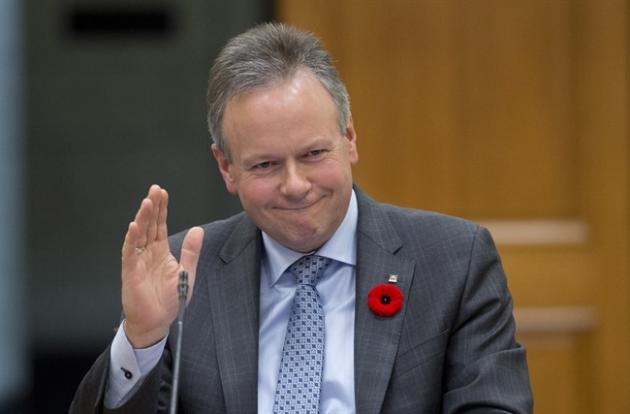
Bank of Canada Governor Stephen Poloz waves as he waits to appear at the Commons finance committee on Parliament Hill in Ottawa, ON Tuesday November 4, 2014. THE CANADIAN PRESS/Adrian Wyld
 Bank of Canada Governor Stephen Poloz waves as he waits to appear at the Commons finance committee on Parliament Hill in Ottawa, ON Tuesday November 4, 2014. THE CANADIAN PRESS/Adrian Wyld
Andy Blatchford, The Canadian Press
 The looming threat of sliding oil prices forced the Bank of Canada to drop its trend-setting interest rate Wednesday, a surprising move that shows just how much the country's economic outlook has soured in a matter of months.
The central bank, which nudged its key rate down to 0.75 per cent from one per cent, said the rapid oil-price collapse has created many unknowns around economic growth in the oil-exporting nation.
Until the effects of oil's late-2014 tailspin started to trickle through, Canada appeared to be on the cusp of a promising post-recession rebound — and inching closer to a rate hike.
"The drop in oil prices is unambiguously negative for the Canadian economy," governor Stephen Poloz said.
"Canada's income from oil exports will be reduced, and investment and employment in the energy sector are already being cut."

Thursday, January 15, 2015

US Oil Gas Methane Regulations Won't Be Matched By Ottawa

METHANE EMISSIONS
Getty
Bruce Cheadle, The Canadian Press
Natural Resources Minister Greg Rickford says he welcomes tough new U.S. oil and gas regulations on methane emissions announced by the White House and calls Canada a "willing partner" — but not one ready to immediately match the American move.

The Obama administration said Wednesday it plans to use its regulatory power to cut methane emissions by between 40 and 45 per cent from 2012 levels by the year 2025.

Methane is a powerful greenhouse gas, far more potent than carbon dioxide, and is emitted in significant volumes in flaring and venting from oil and gas operations.

The announcement came while Rickford was in Washington making yet another pitch in support of TransCanada's proposed Keystone XL pipeline.

"Any time the United States is thinking about regulations in coal or methane, it tells me two things," Rickford said at a news conference in the U.S. capital.

"One: Canada is a willing partner. And two: That this is an opportunity for Canada and the United States and Mexico, in a trilateral sense, to bring North American opportunities and solutions to challenges we face in energy."

Government Plans Balanced Budget Despite Cheap Oil


The Canadian Press
Federal Finance Minister Joe Oliver says the government still plans to balance the budget and keep its commitments despite the collapse of oil prices.

Oliver’s remarks follow recent expert warnings that the steep slide in crude prices could erase the government’s projected $1.6 billion surplus for the 2015-16 fiscal year.

Since the government’s surplus prediction last fall, oil prices have fallen from US$80 per barrel to below US$50.

World decline in oil price to impact Canada real estate in 2015

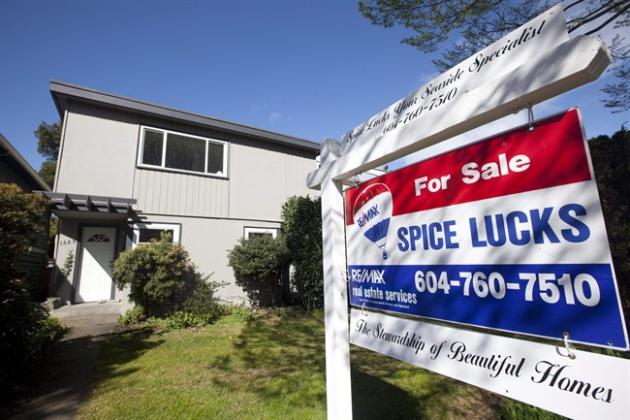
A for sale sign sits outside a home in Vancouver on April 8, 2010. Royal LePage says the price of a Canadian home is expected to rise by a relatively modest 2.9 per cent on average in 2015 as price appreciation slows across the country. THE CANADIAN PRESS/Jonathan Hayward
The Canadian Press - A for sale sign sits outside a home in Vancouver on April 8, 2010. Royal LePage says the price of a Canadian home is expected to rise by a relatively modest 2.9 per cent on average in 2015
By Alexandra Posadzki, The Canadian Press
Royal LePage says the price of a Canadian home is expected to rise by a relatively modest 2.9 per cent on average in 2015 as price appreciation slows across the country.
Toronto is expected to lead the pack when it comes to price increases this year, with the realtor saying the average home price in Canada's largest city is forecast to rise by 4.5 per cent, although that would be well behind last year's pace.
Vancouver is expected to see the second-biggest average jump in prices, up 2.8 per cent, followed by a 2.4 per cent gain in Calgary, 0.6 per cent in Montreal and 0.5 per cent in Halifax among several of the major centres surveyed across the country.

Wednesday, January 14, 2015

Low oil prices hurting Canada’s post recession recovery


The Canadian Press
The Bank of Canada says low oil and commodity prices are putting the Canadian economy’s post-recession recovery at risk.

The central bank’s deputy governor Timothy Lane told an American audience Tuesday that if cheap crude prices persist, they will significantly discourage investment in the oil sector, which he said accounts for about three per cent of Canada’s gross domestic product.

In prepared remarks of his speech in Wisconsin, Lane said lower oil prices produce benefits such as putting more disposable cash in consumers’ pockets and helping to cut costs for other sectors, like manufacturing.

But, Lane predicts the gains will be more than outweighed by the losses because lower incomes in the oil patch and along its supply chain will hurt the rest of Canada’s economy.

“Despite the mitigating factors I enumerated, lower oil prices are likely, on the whole, to be bad for Canada,” Lane said.

Tuesday, January 13, 2015

Finally! Keystone XL pipeline project moves forward in US Senate


Alexander Panetta The Canadian PressThe Keystone XL pipeline passed a major procedural hurdle in the United States Senate, receiving enough votes Monday to override a filibuster for the first time in the years-long dispute.

The chamber agreed to move forward with debate on a bill that would force President Barack Obama to approve the controversial Canadian oil infrastructure.

The vote reflects the power of the new Republican majority following the midterm elections, and is the first piece of legislation advanced in the new congressional session.

Similar legislation had never managed to attain the filibuster-proof 60 votes under Democratic control — and, on Monday, it cleared that hurdle with 63 votes.

Monday, January 12, 2015

Alberta | Low oil price means $500M budget deficit

Alberta Premier Jim Prentice gives a state-of-the-province address in Edmonton, Alberta on December 9, 2014. Alberta Premier Jim Prentice says oil prices have plunged so far so fast that this year's projected budget surplus will now be a $500-million deficit. THE CANADIAN PRESS/Jason Franso
Dean Bennett  The Canadian PressAlberta Premier Jim Prentice says oil prices have plunged so far so fast that this year’s projected budget surplus will now be a $500-million deficit.

And he says while his advisers expect oil to rebound slowly over the coming years, the budget may remain in deficit until 2018.

“It’s the most serious fiscal circumstance we’ve seen in a generation in this province,” Prentice said in an interview Thursday.

“Things have turned so dramatically that we’ve gone from a $1.5-billion surplus in November to what looks like a $500-million deficit based on today’s projections.

Monday, January 5, 2015

Tough Times For Venezuela As Oil Price Remain Unstable

President Hugo Chavez
Times are tough in Venezuela and likely to get even tougher this year.

Before oil prices started crashing last summer, cutting revenue for the oil-rich country, President Nicolas Maduro was already presiding over a country plagued by food shortages, soaring inflation and rising discontent, NPR.com reports.

All this has made the president unpopular in many quarters. And it would seem to present a golden opportunity for opponents of the country’s socialist government that’s held power for the past 15 years.

However, Venezuela’s opposition remains fractured and weak while one of its main leaders, Leopoldo Lopez, is behind bars.

Saturday, January 3, 2015

Canadian exports will rise despite cheaper oil, says RBC expert

An increase in exports of items that aren't energy-related should be more than enough to offset the impact of slumping oil prices, Royal Bank says.
An increase in exports of items that aren't energy-related should be more than enough to offset the impact of slumping oil prices, Royal Bank says. (Timothy Fadek/Bloomberg)
CBC News
One of Canada's biggest banks says an increase in exports that aren't oil and an uptick in consumer spending because of cheaper gasoline prices should be enough to offset the impact on the economy from cratering oil prices.

In its latest market outlook, the Royal Bank of Canada says 2014 was a turning point for Canada's economy in that economists finally started seeing a long overdue increase in Canadian exports from things outside of the always volatile energy sector.

Wednesday, December 31, 2014

World Oil price falls below $56, heads for biggest annual drop since 2008

A flame shoots out of a chimney at a petro-industrial factory in Kawasaki near Tokyo December 18, 2014. REUTERS/Thomas Peter
Oil dropped below $56 a barrel on Wednesday and was heading for its biggest annual decline since 2008, pressured by weakening demand and a supply glut prompted by the U.S. shale boom and OPEC's refusal to cut output.
Global benchmark Brent crude has fallen 49.5 percent in 2014 as demand growth slowed, the United States expanded output and OPEC, dropping its strategy of trimming supply to keep oil around $100 a barrel, chose instead to defend market share.
On Wednesday, prices came under further pressure from a survey showing China's factory sector shrank for the first time in seven months in December - a bearish indication on the strength of oil demand in the world's second-largest consumer.

Tuesday, December 30, 2014

Plunge in crude oil prices named top Canadian Press business story of the year

A person pumps fuel in Toronto after gasoline prices rose overnight on Wednesday, September 12, 2012. From Alberta oilfields to Bay Street boardrooms to the corner gas station, the precipitous drop in the price of crude oil is expected to have far-reaching impacts across the country heading into 2015, making it The Canadian Press Business News Story of the Year. THE CANADIAN PRESS/Michelle Siu
A person pumps fuel in Toronto after gasoline prices rose overnight on Wednesday, September 12, 2012.  CP
Lauren Krugel, The Canadian Press
From Alberta oilfields to Bay Street boardrooms to the gas station on the corner, the precipitous drop in crude prices is expected to have far-reaching impacts across the country heading into 2015, making it The Canadian Press Business News Story of the Year.
The abrupt turnaround in oil markets was chosen by half of the 50 editors and news directors across the country who participated in the annual survey.
In explaining their pick, many respondents noted the story's ripple effects beyond the oilpatch.
Richard Dettman, business editor at News 1130 in Vancouver, said the halving in crude prices over a six-month span created a "gusher of stories" — the hit to federal and provincial government coffers, the plunging loonie and the benefit to consumers, to name a few.

Friday, December 26, 2014

Canadian oil producers feeling pain of low prices as drilling rigs drop to 5yr low

Rigs searching for oil in Canada fell by 25 to 190 last week, the lowest on a seasonal basis since 2009.
Rigs searching for oil in Canada fell by 25 to 190 last week, the lowest on a seasonal basis since 2009. Matthew Staver/Bloomberg
 
Canadian oil producers are proving less resilient than their U.S. counterparts to plunging prices.

Rigs searching for oil in Canada fell by 25 to 190 last week, the lowest on a seasonal basis since 2009, Baker Hughes Inc. said on its website Dec. 19. The U.S. total dropped by 10 to 1,536, the highest for that time of the year in at least a decade.

Canadian crude has lost more than a quarter its value since a decision last month by the Organization of Petroleum Exporting Countries to maintain output targets amid a surge in North American production. Alberta’s oilsands and Duvernay shale are among the highest-cost areas in the world to produce. About one- fourth of oilsands projects are at risk as prices fall, the International Energy Agency said Oct. 14.

Monday, December 22, 2014

Canada sanctions on Russian oil industry


Canada announced new sanctions against Russia on Friday, including additional restrictions on the export of technology used in the oil and gas industry.

Foreign Minister John Baird also said sanctions were being applied on a number of individuals in Russia and Ukraine, due to Russia's actions in Ukraine.

"Doing nothing is not an option," Baird told a news conference.

Thursday, December 18, 2014

Canada real estate market could fall like oil

A pump jack and a house northwest of Calgary. Experts in the oil industry seemed not to see the fall in prices coming. Could the same thing be happening again with house prices?
A pump jack and a house northwest of Calgary. Experts in the oil industry seemed not to see the fall in prices coming. Could the same thing be happening again with house prices? (The Canadian Press)
Don Pittis, CBC News
Recent reassuring comments about the Canadian housing market remind me of similar blandishments when oil prices began to fall.

I wouldn't want to overemphasize the parallels between houses and petroleum. Indeed, there are many differences in the two markets, which I will expand upon in a moment.

But first the similarity. It is that, just as with oil, so many of the people we expect to know what is happening refuse to admit that house prices can go through big declines as well as big increases.

Read full story on CBC